
Introduction
By the time 1967 rolled around, the Mustang had only been on the market for a little over two years, but it had already become one of the fastest-selling cars in American history. Rather than resting on that success, Ford used 1967 to deliver the model’s first major redesign, setting the stage for what many consider one of the most well-rounded and iconic Mustangs ever built, and one that still gets talked about decades later.
For anyone exploring the history of classic American cars, the 1967 Mustang represents an important stage in the model’s development. Its wider design, updated styling, and expanded engine options reflected Ford’s response to growing competition in the performance-car market. The model also introduced practical and comfort-focused improvements that helped broaden its appeal beyond pure performance. These changes make the 1967 model year particularly interesting to enthusiasts who want to understand how the Mustang evolved during the late 1960s.
A Redesign Born From Competition
The original Mustang launched in April 1964 to overwhelming demand, selling around 22,000 units on its first day alone and topping a million units within two years. That runaway success invited competition fast, with Chevrolet’s Camaro, Plymouth’s Barracuda, and Pontiac’s Firebird all entering the market by 1967. Ford responded by giving the Mustang its first significant facelift, making the car wider, more powerful, and considerably more aggressive looking.
What Actually Changed for 1967
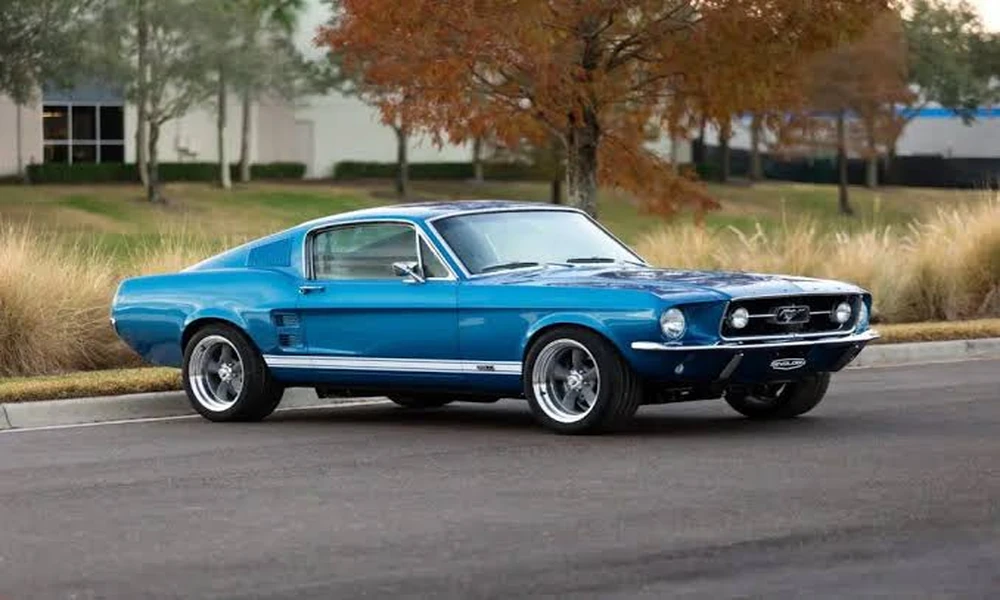
The redesign brought a wider body, an enlarged grille opening, and a fastback roofline that extended fully to the rear for a beefier, more purposeful profile than the shorter fastback used in 1965 and 1966. Under the hood, the Mustang gained access to genuine big-block power for the first time, including a 390-cubic-inch V8, giving Ford a legitimate answer to the muscle its new rivals were bringing to the table.
Style That Balanced Sport and Comfort
Inside, the 1967 model brought a redesigned dashboard with integrated gauges, thicker and more comfortable seats, and the option of air conditioning, a rare comfort feature for a performance car of that era. The fastback also introduced fold-down rear seats, adding practicality to a car that was still very much built around speed and style rather than everyday convenience.
A Car That Became Bigger Than the Road
Beyond the specs and styling changes, the 1967 Mustang cemented itself in pop culture, appearing in films and music and becoming a recognizable symbol of the era’s automotive spirit. That kind of cultural staying power is rare for any car, let alone one competing in an increasingly crowded market, and it’s a big part of why the 1967 model still gets singled out from the rest of the Mustang’s long lineup.
Why This Model Year Still Stands Out
Later Mustangs would go on to get bigger engines and more elaborate performance packages, but the 1967 redesign holds a special place as the moment the car first proved it could evolve without losing what made it popular in the first place. That balance of familiarity and reinvention is part of why collectors and historians alike keep coming back to 1967 when tracing the Mustang’s most important years.
Conclusion
The 1967 Ford Mustang represents a pivotal moment for the nameplate, a car reshaped by real competition that still managed to come out more confident and more capable than before. Between the styling overhaul, the added power, and its lasting cultural presence, it’s easy to see why this particular model year continues to draw so much attention from collectors and casual fans alike. Few redesigns in automotive history have aged quite this well.