
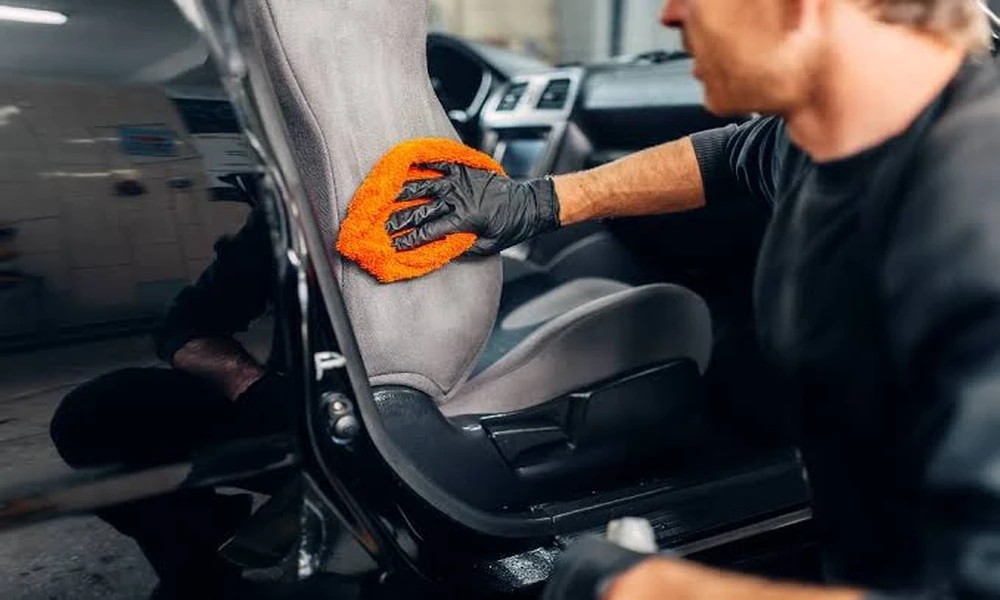
Handing your car to a detailer takes more trust than most people realize. You’re giving a stranger your keys, your interior, and your clear coat, which can’t be fully restored once it’s damaged.
A good detail can make a five-year-old car look better than it did on the dealer lot. A bad one can leave swirl marks, stained seats, or a burned-through panel edge that costs more to fix than the detail itself.
Most shops look alike from the outside, with glossy photos and a “full detail” package. The way to tell them apart is to ask the right questions and listen closely to the answers.
1. What exactly is included in this package?
“Detailing” isn’t a regulated term, so package names mean different things at different shops. One shop’s “full detail” is a wash, vacuum, and spray wax. Another’s includes clay bar decontamination, machine polishing, cabin steam cleaning, and a sealant.
Ask the shop to walk you through each step. Outside, look for iron removal, clay bar work, polishing, and a protective layer. Inside, ask whether seats are shampooed or just vacuumed, whether carpets get hot water extraction, and how leather is cleaned.
Established shops usually publish a clear, itemized breakdown of detailing services, which lets you compare actual work rather than package names. If a shop only says “we just make it look great,” take that as a warning.
2. How do you wash the car?
This sounds basic, but it’s one of the best tests of skill. Most swirl marks on dark paint come from careless washing, not from the road.
A careful detailer will mention foam pre-soaking, the two-bucket method with grit guards, pH-balanced shampoo, clean microfiber, and a gentle drying process such as filtered air or plush towels.
Ask about wheels too. Brake dust is abrasive, so good shops use separate buckets, brushes, and towels for wheels. If the same mitt goes from the wheels to the hood, you’ll see the damage eventually.
3. Who will actually be working on my car?
The person running the website may not be the person holding the polisher. That’s normal, but you should still know who’s doing the work and how they were trained.
Detailing doesn’t require licensing in most places, so certification is a helpful signal. The International Detailing Association offers programs that test technicians on core skills. It’s not a guarantee, but it shows real investment in the craft.
For paint correction, ceramic coatings, or paint protection film, ask about experience with your specific vehicle. Soft Japanese clear coats, classic single-stage paint, and matte finishes each need a different approach.
4. Are you insured, and what if something goes wrong?
Good shops expect this question. Even skilled technicians occasionally make mistakes, such as a pad catching an edge or a chemical staining trim.
Ask about general liability insurance and, for shops that keep cars on site, garagekeepers coverage. Mobile detailers should explain how they handle damage in your driveway or garage.
Pay attention to how they talk about accountability. A professional will inspect the car with you first and note existing chips and scratches. A shop that says “nothing ever happens” hasn’t thought much about risk.
5. Can I see your work, and are your reviews real?
Look at before-and-after photos critically. The most convincing ones show the same panel under the same harsh light, which reveals swirls instead of hiding them. Ask for examples on vehicles similar to yours.
Read reviews for substance, not star counts. Detailed reviews that mention specific services and how problems were handled are worth more than a burst of one-line five-star ratings.
Fake reviews are common enough that the FTC adopted a final rule banning fake reviews and testimonials in 2024. A modest number of thoughtful reviews often beats an oddly flawless record.
6. What will correction or coating realistically achieve?
Paint correction removes a thin layer of clear coat to level out defects. It fixes most swirls and light scratches, but scratches that go through the clear coat can only be improved, not erased. Ask whether the shop measures paint thickness with a depth gauge before heavy polishing.
Ceramic coatings add gloss, chemical resistance, and easier washing, but they aren’t armor. They won’t stop rock chips or door dings, which is what paint protection film is for. Be wary of anyone calling a coating “permanent.”
Sometimes the best detailers talk you out of the priciest option. If your car lives outside and sees gas-station washes, a durable sealant may suit you better than a multi-year coating.
7. What does the quote include, and how long will it take?
Prices vary for real reasons: vehicle size, condition, and paint type. Heavy pet hair, sand, mold, or smoke odor often add surcharges, so describe your car honestly and send photos if you can.
Ask whether the price is firm, what could change it, and how they’ll contact you if they find surprises. A proper correction and coating can take one to three days, partly because coatings need curing time.
Finally, ask about aftercare. A good detailer will explain how to wash the car afterward, what to avoid, and when to return for maintenance.
Putting it all together
Choosing a detailer isn’t about the lowest price or the flashiest feed. It’s about finding someone who explains their process clearly and is honest about what their services can do.
Try asking two or three local shops these same seven questions. Some will answer with specifics and confidence, and others will rely on vague reassurance. The difference is usually obvious.
As you start your search, notice how established shops like Chariot Detailing present clear service information and an easy way to ask questions. Whichever shop you choose, the right questions will protect your car, your money, and your peace of mind.